Skip to content
New Activity School New Activity School Grant Road - Since 1953
Enquire

Curriculum

Roots for childhood. Wings for the future.

NAS keeps play at the centre while making learning purposeful. Children build attention, empathy, language, movement and agency, while meeting early sequencing, patterns, problem-solving and reflection through stories, routines, materials and physical games.

Guided play Growth over grades Screen-wise thinking NCF-FS aligned spirit
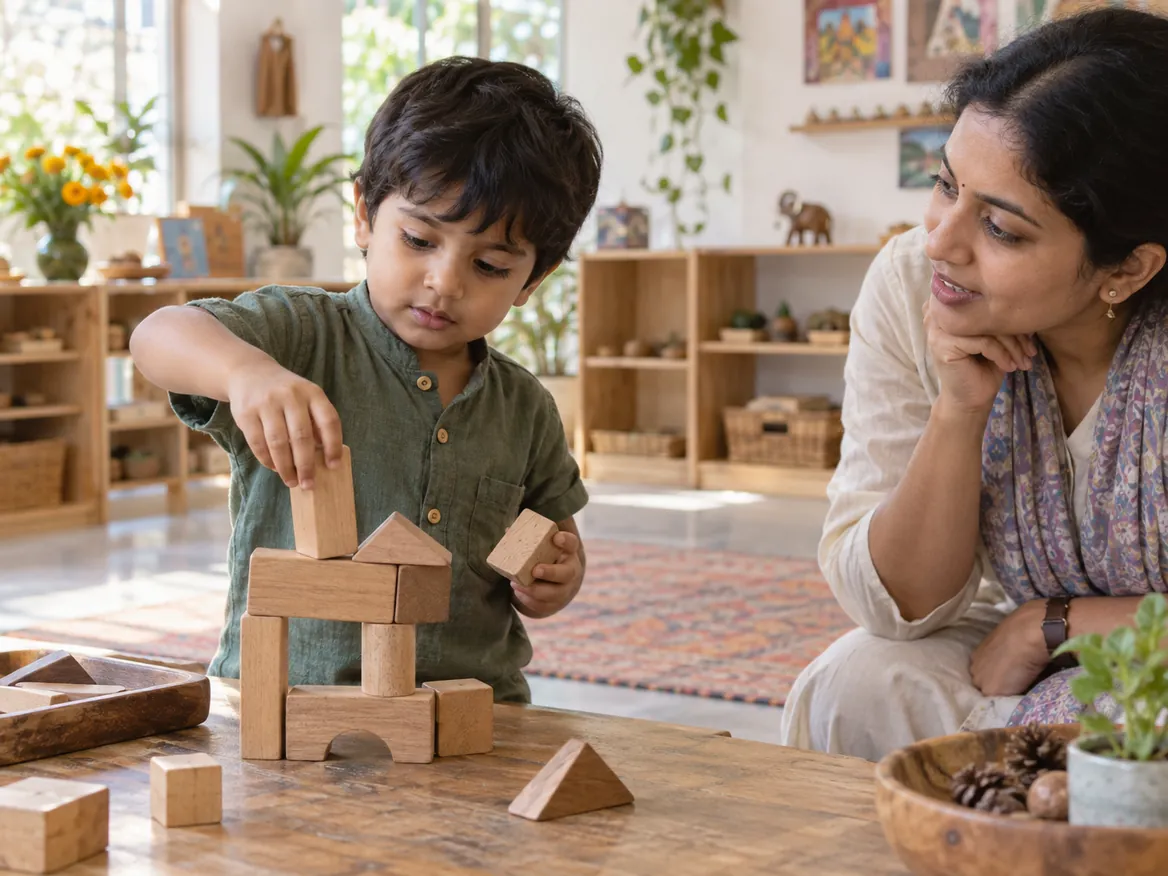
Children at New Activity School exploring curriculum through guided activity
Curriculum becomes visible through play, teacher language, observation, materials and reflection.

Roots and Wings

A simple idea with serious depth.

The NAS curriculum is built around two promises: protect the roots young children need now, and grow the wings they will need for the world ahead.

Roots

Sensory learning, nature, movement, music, stories, practical life, relationships, Mumbai culture and hands-on investigation.

Movement Stories Nature Practical life
Wings

Sequencing, patterns, decomposition, problem-solving, systems thinking, debugging and physical coding games without turning early years into screen time.

Patterns Sequencing Debugging Systems

Four Pillars

Four ways a child grows.

Language and approaches to learning run through all four pillars, so curriculum is not split into isolated subjects too early.

Cognitive

Thinker

Inquiry, language, early mathematics, logic and attention.

Creative

Artist

Imagination, representation, making and expressive confidence.

Social

Leader

Empathy, communication, cooperation and conflict repair.

Physical

Enabler

Agency, coordination, movement, self-care and independence.

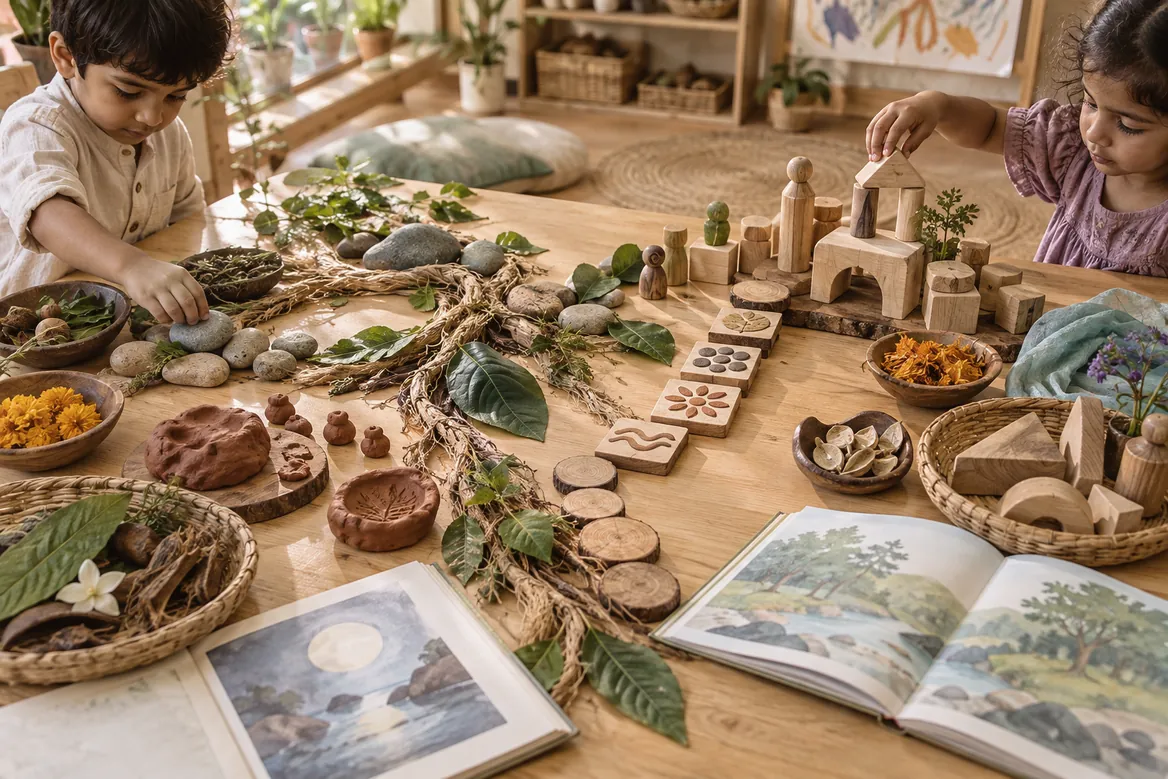
NAS children learning through movement, materials and guided play
Guided play protects child agency while the teacher holds a learning intention.
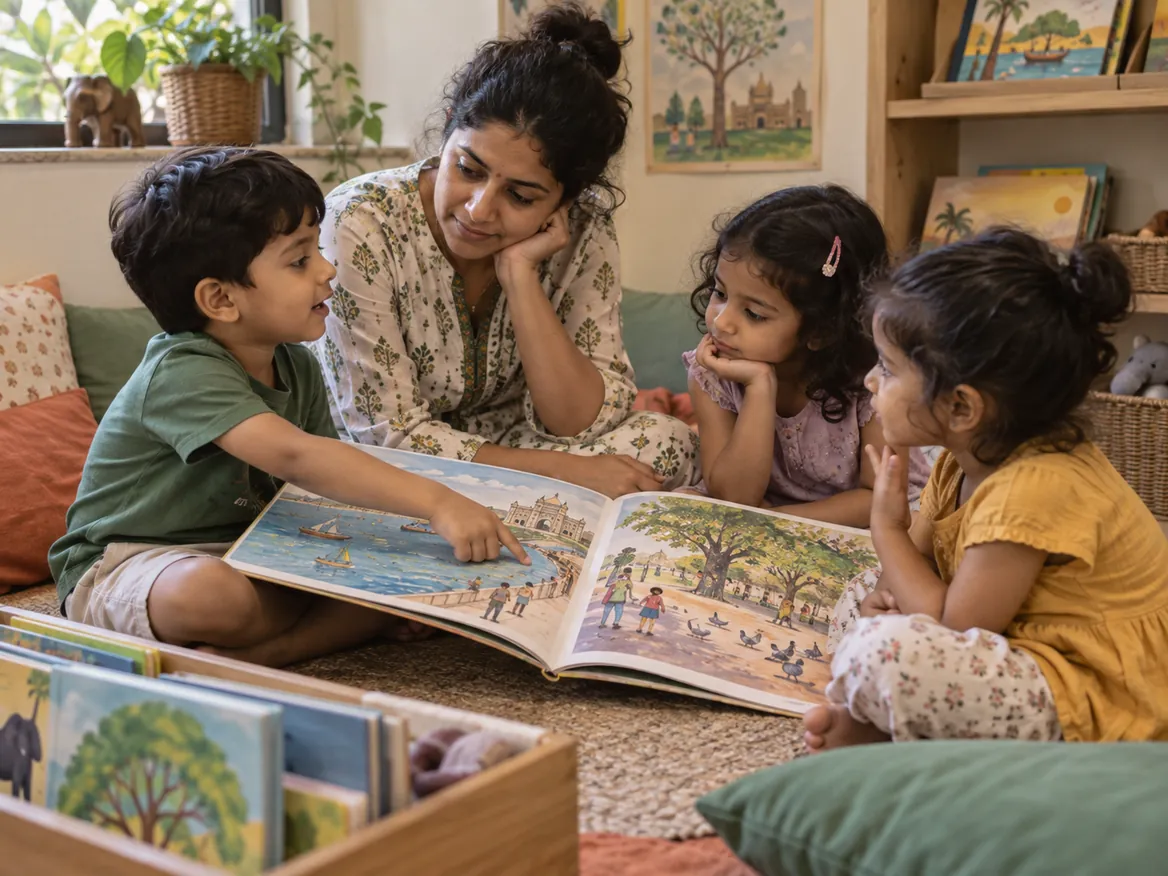
NAS children building language through story and conversation
Serve and return, dialogic reading and conversation build language.
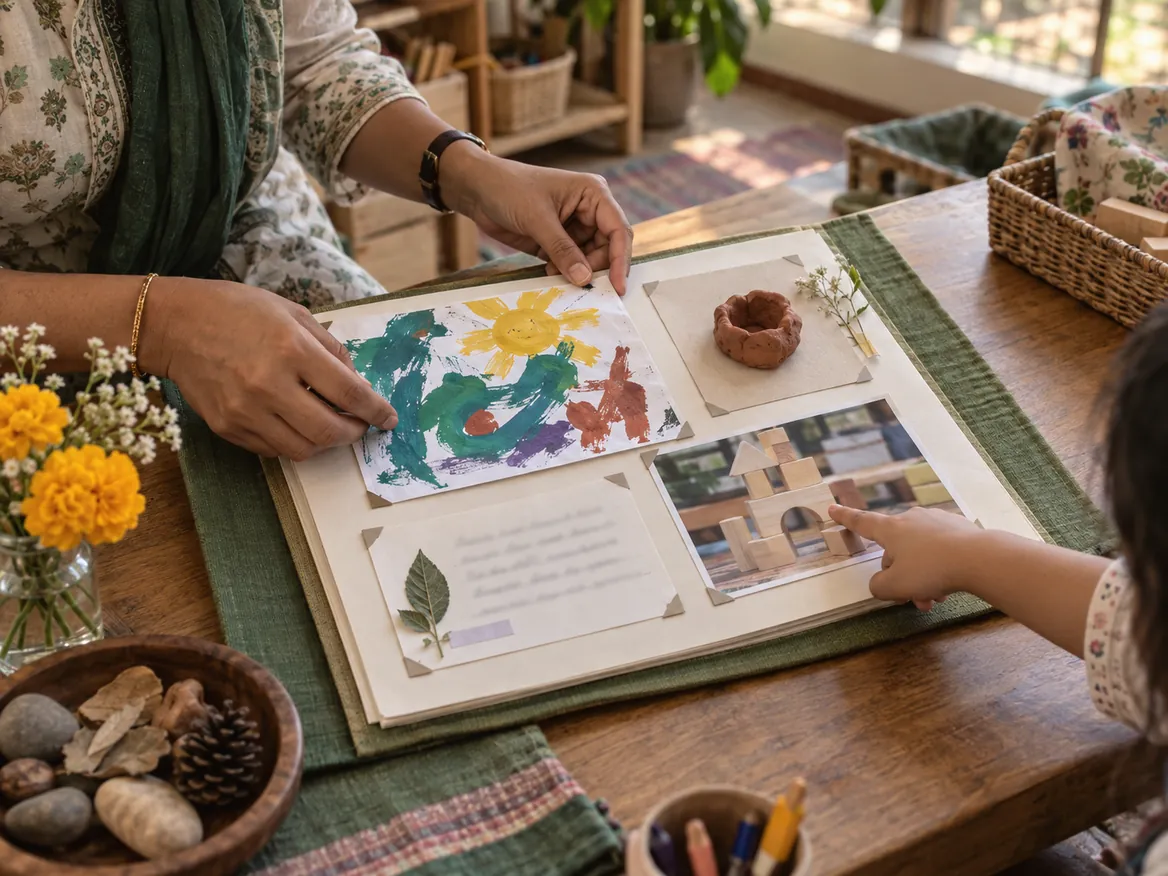
NAS children making thinking visible through art and activity
Documentation, work samples and child words help teachers plan next steps.

How Play Becomes Learning

The teacher's work is in the moment.

NAS classrooms depend on warm adult-child interaction, careful observation and the ability to extend a child's idea without taking it away.

Serve and return.

Teachers notice, respond, name, wait and follow the child's ending.

Guided play.

The child leads the exploration while the adult carries a clear learning intention.

Inquiry cycle.

Provocation, investigation, documentation, reflection and a next question.

Shared thinking.

Adult and child stay with an idea long enough for thinking to deepen.

Dialogic reading.

Children become active storytellers through prompts, pauses and expansions.

Living algorithms.

Routines become sequences, loops, patterns and conditions children can act out.

Studio Journey

From exploring to innovating.

As children grow, the curriculum becomes more layered: still playful, still relational, but increasingly able to hold inquiry, independence, collaboration and reflection.

Explorer Studio

Nursery children build safety, language, sensory confidence, movement, songs, stories and first classroom routines.

Experimenter Studio

LKG children test ideas through making, sorting, questioning, patterning, early mathematics, stories and collaborative play.

Innovator Studio

UKG children strengthen listening, early literacy, number sense, problem-solving, independence and readiness for the next school step.

Growth Over Grades

Observation tells us more than pressure.

NAS understands progress through real classroom moments: play, conversations, work samples, photographs, child words, teacher notes and portfolios. The aim is to plan the next helpful step, not rank young children.

  1. 01Observe.

    Teachers watch children in normal activity, not only in formal tasks.

  2. 02Document.

    Learning stories, photographs, work samples and child quotations make growth visible.

  3. 03Plan.

    Developmental progressions help teachers choose the next material, question or support.

  4. 04Share.

    Families receive plain-language conversations about growth, readiness and support.

Parent Partnership

Home and school carry the same child.

NAS parent education stays practical: shared reading, conversation, play, sleep, screens, routines, emotion coaching, independence, nutrition and readiness without pressure.

Read the parent guide

Read together

Stories become conversation, attention and imagination.

Talk back and forth

Responsive adult-child turns are a powerful learning habit.

Protect rhythm

Sleep, movement, meals and routines support regulation.

Keep play human

Future-facing thinking can grow through bodies, materials and relationships.

Next Step

Ask how the curriculum fits your child's stage.

Share your child's age, questions and programme interest. NAS will guide you on the right early-years fit and a gentle next step.

Start admission enquiry
WA