Play-way
Learning routePlay is the way young children learn, not a break from learning.
FAQ
Clear answers on admissions, location, age groups, play-way learning, readiness and how children are understood.

Quick Answer Map
Start with the big questions, then open the details when you need them.
Play is the way young children learn, not a break from learning.
Language, movement, independence and comfort matter together.
Growth is observed through play, talk, work samples and routines.
Home habits and school observations support the same child.
Parent Questions
Here are the school basics before you call or visit, with the same warm detail you would hear in person.
We learn while we play means children learn through guided activity, stories, songs, movement, art, language, routines and joyful classroom experiences. Play is treated as the way young children learn, not as a break from learning.
No. NAS protects child-led play, but teachers also use guided play: the child leads the exploration while the adult holds a learning goal, adds vocabulary, asks open questions and gently extends the idea.
Yes, but through developmentally appropriate experiences: shared reading, storytelling, songs, sound play, everyday print, concrete number games, sorting, patterning, movement and conversation. The aim is deep readiness, not early pressure.
NAS is not a pure Montessori school. It borrows wisely from strong early-years traditions: prepared environments and independence from Montessori, documentation and projects from Reggio, plan-do-review thinking from HighScope, and play-based learning aligned with Indian foundational-stage guidance.
NAS prepares children through language, confidence, independence, self-regulation, listening, movement, social comfort, early literacy and numeracy foundations. These are built through routines and guided experiences rather than worksheets alone.
Roots are the foundations of childhood: movement, sensory learning, stories, relationships, practical life, nature and language. Wings are future-facing ways of thinking such as sequencing, patterns, problem-solving, systems thinking and debugging, learned through physical play and tangible materials.
No. NAS is screen-wise rather than screen-heavy. Children can learn future-facing thinking through bodies, relationships, stories, routines, nature and hands-on materials before technology becomes a device-led experience.
We do not test or rank young children. Growth is understood through observation, conversations, work samples, play moments and teacher notes.
Growth Over Grades means NAS understands progress through everyday classroom evidence: observation, learning stories, work samples, photographs, child words, teacher notes and portfolios. The purpose is to plan the next helpful step, not rank young children.
Teachers watch children in real classroom moments: play, stories, art, movement, routines, conversation and small-group work. The aim is to understand the next helpful step for each child and communicate growth in plain language.
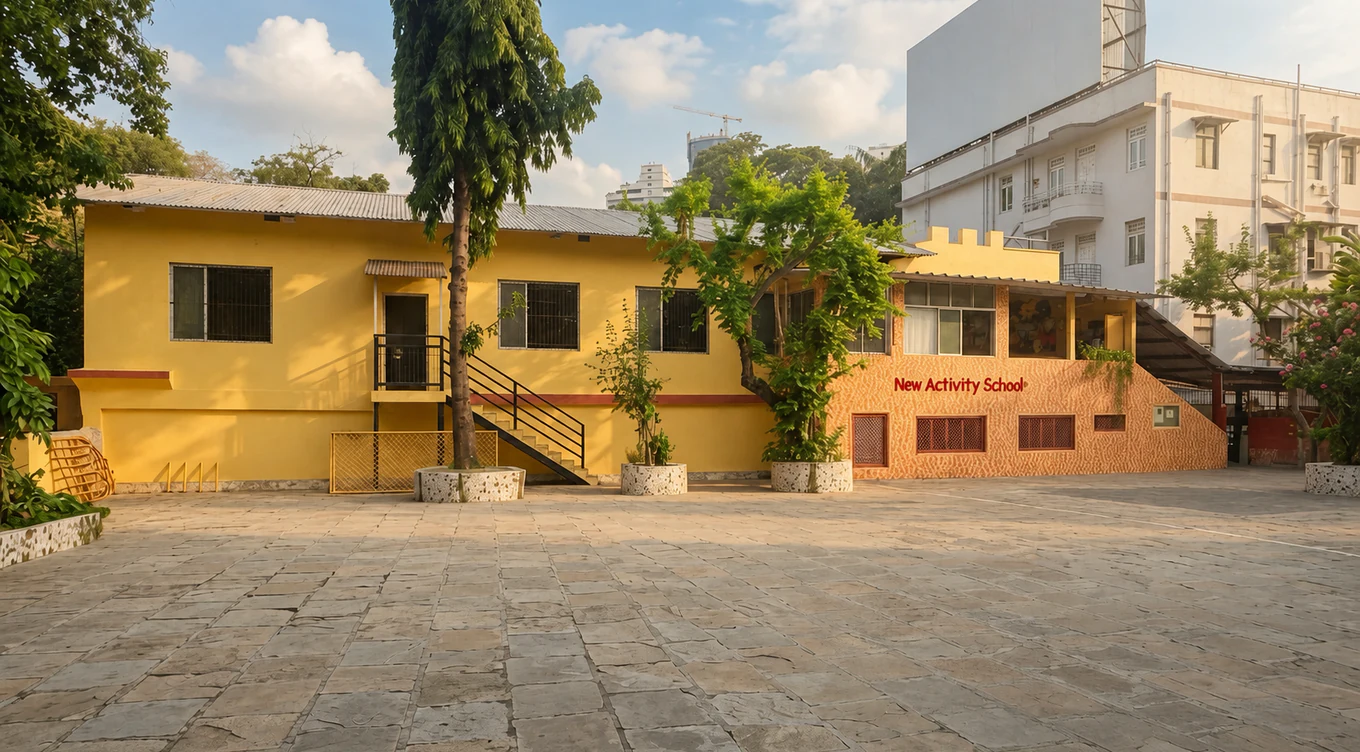
New Activity School is located at Grant Road, near Kemps Corner, South Mumbai.
New Activity School was founded in 1953 by Mrs. Dolat Doongaji.
Parents can enquire for Playgroup / Mother-Toddler, Nursery, Junior KG and Senior KG through the NAS admissions form.
The school considers the child's age band, confidence, independence, separation readiness, language, routines and programme availability. The admission conversation is about fit, not a hard sell.
Parents are treated as partners. The strongest home support is often simple: shared reading, rich back-and-forth talk, routines, sleep, movement and warm responses. NAS parent conversations support those habits rather than send home busywork.
Young children develop at different speeds. We notice gently, talk with families early, support the child in the ordinary classroom where possible and avoid labelling. If a closer look is needed, families are guided warmly.
The NAS direction is aligned with the spirit of India's foundational-stage guidance: play- and activity-based learning, language-rich classrooms, whole-child development, no formal exams for young children and attention to readiness beyond rote academics.
Age bands differ from school to school. At NAS, Toddler (Playgroup / Mother-Toddler) is for about 1.5 to 2.5 years, Nursery 2.5 to 3.5, Junior KG 3.5 to 4.5 and Senior KG 4.5 to 5.5. The school office confirms the fit for your child’s date of birth.
NAS shares its current fee sheet and session timings in writing on request, so families compare the complete cost rather than an old directory figure. WhatsApp +91 98333 90451 or ask on the fees and timings page.
Timings vary by programme and school year. The NAS office confirms the current session for Playgroup, Nursery, Junior KG or Senior KG.
At NAS the first school experience is held gently through familiar adults, sensory play, movement, songs and predictable routines. A visit and a conversation about settling readiness help each family decide.