Skip to content
New Activity School New Activity School Grant Road - Since 1953
Enquire

Play-Based Learning

Play is how young children think.

At NAS, play is not a break from learning. It becomes learning when adults prepare the environment, observe closely and add the next word, question, material or routine.
Child-led curiosity Adult intention Materials Stories Movement
NAS children learning through guided play and activity
At NAS, parent guidance stays connected to what children actually experience.

Plain Answer

What parents need to know.

Guided play helps children learn because it is joyful, meaningful, active, social and supported by an adult who knows the learning goal.

Good play has a learning intention.

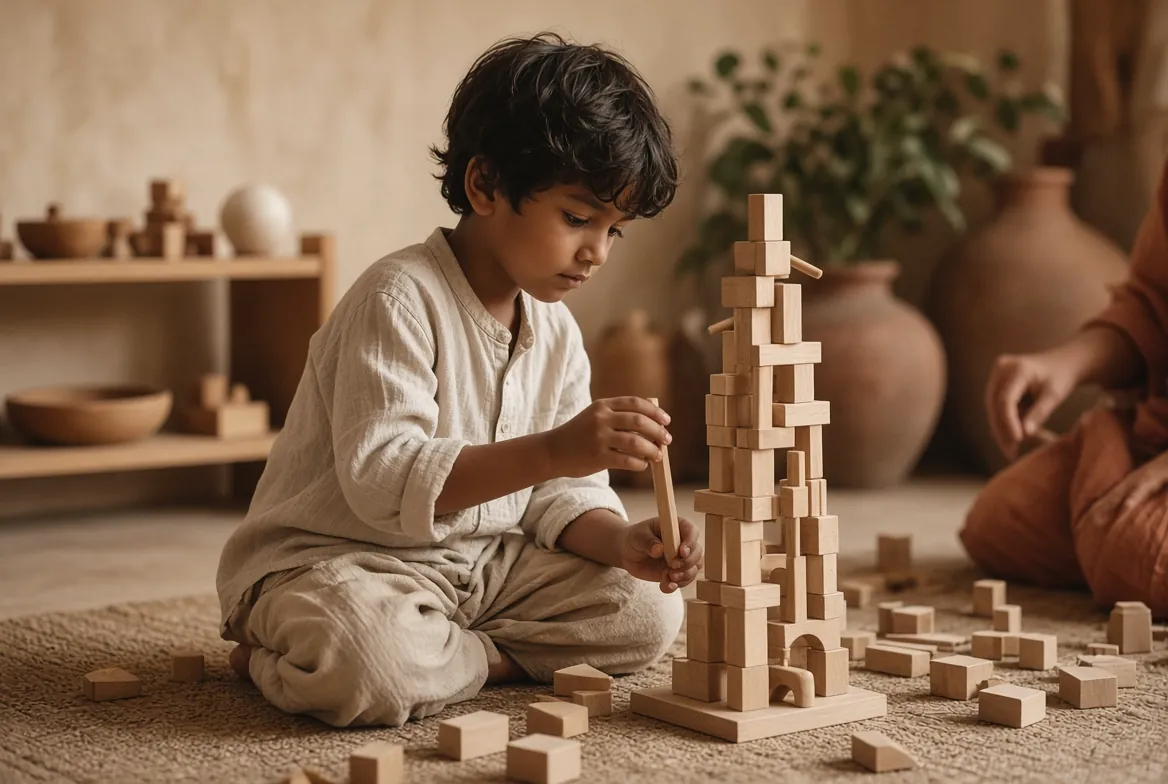
The child may be building a tower, but the teacher is watching balance, comparison, vocabulary, planning, peer talk and persistence.

The adult does not take over.

A good teacher waits, notices, names, wonders and extends. The child still owns the play.

Play protects motivation.

Children repeat, test, pretend, negotiate and try again because the work feels meaningful to them.

Make It Visible

How this shows up in real life.

Parents usually need fewer abstract terms and more things they can actually notice.

At NAS

Blocks, art, stories, sensory play, pretend play, movement and small-group inquiry are treated as serious learning routes.

At home

Let children build, sort, pretend, mix, move and retell stories. Add language instead of turning play into a quiz.

Watch for

Children making plans, changing ideas, using new words, waiting for turns and solving small problems.

Ask one open question.

Try "What are you making?" or "What could happen next?" instead of many rapid questions.

Keep materials open-ended.

Blocks, cloth, boxes, bowls, leaves and dough invite more thinking than a toy with one fixed answer.

Let repetition happen.

Repeating a game is often the child practising control, prediction and confidence.

Parent FAQ

Answers you can come back to.

Short answers help families compare advice, ask better questions and see what NAS means in practice.

Yes, when play is guided well. Readiness grows through language, attention, movement, number sense, independence, social comfort and confidence.

Free play is child-led. Guided play keeps child agency but adds a prepared environment, adult observation and gentle next-step support.

NAS prioritises hands-on materials, stories, movement, drawing, practical life and observation before worksheet-style output.

WA