Skip to content
New Activity School New Activity School Grant Road - Since 1953
Enquire

Early Maths

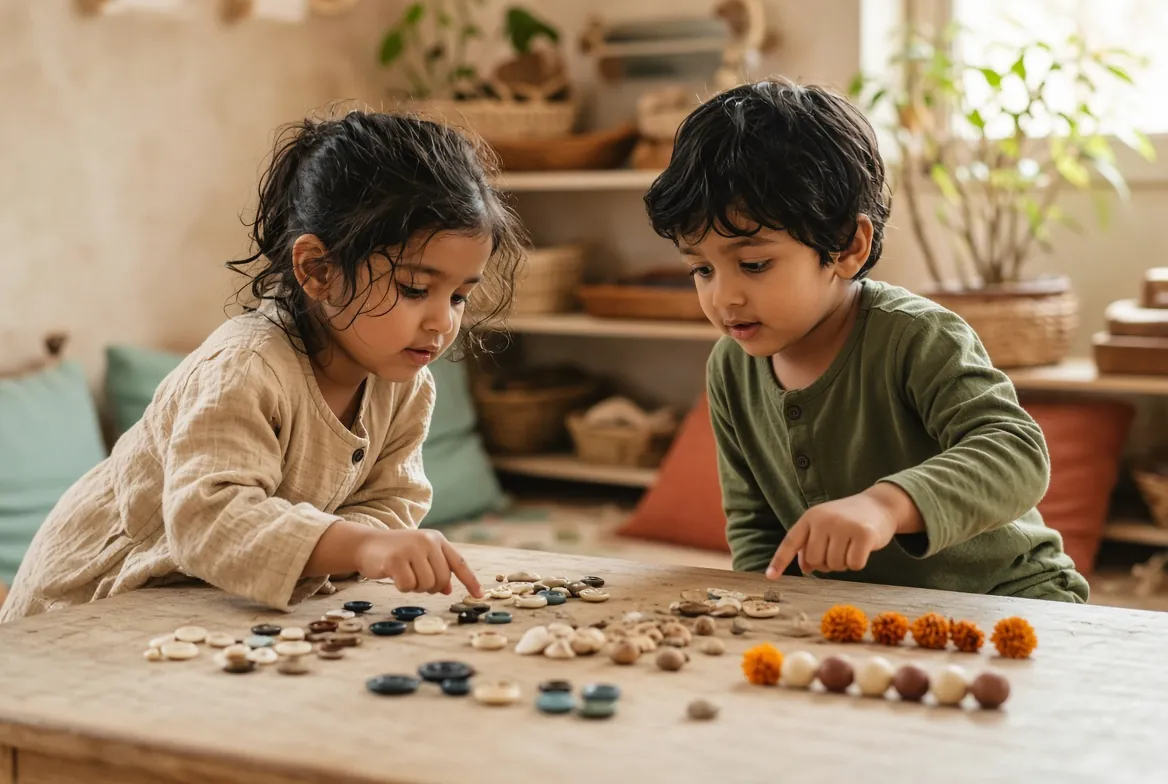
Maths begins with real things.

Young children understand maths through bodies, objects, routines and words: more, fewer, same, bigger, smaller, first, next, altogether and again.
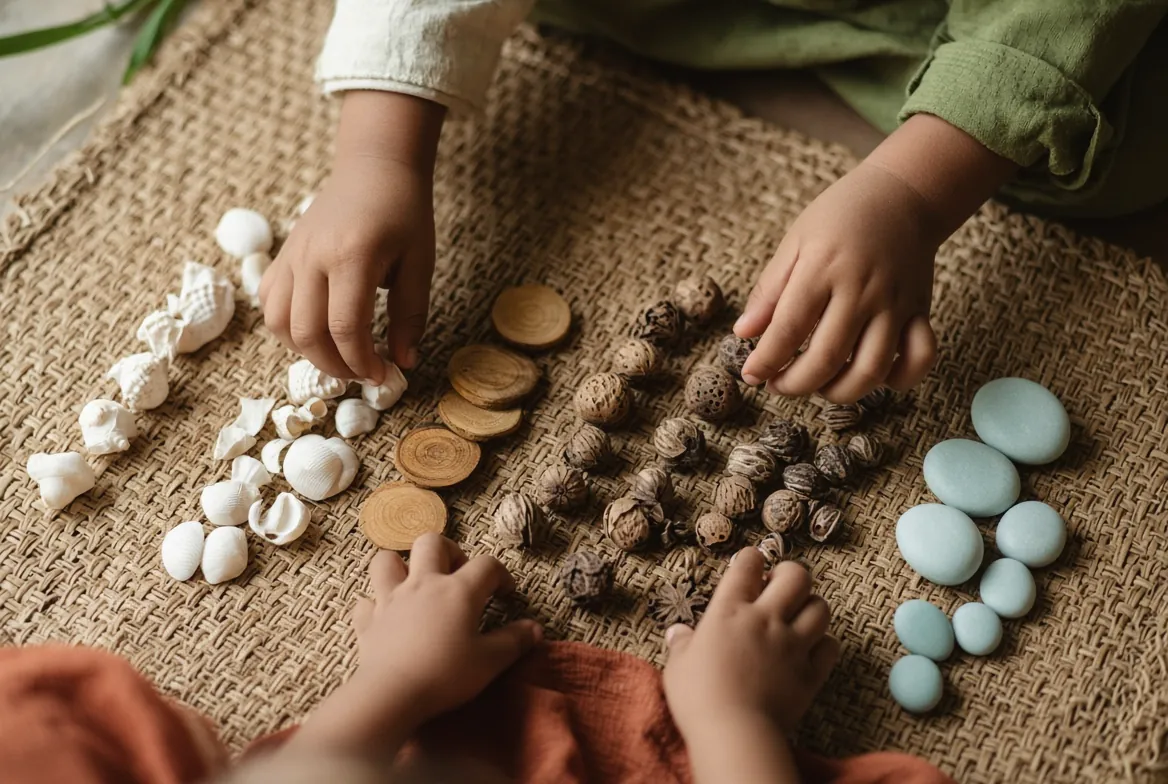
Sort Count Compare Pattern Measure
NAS children learning through guided play and activity
At NAS, parent guidance stays connected to what children actually experience.

Plain Answer

What parents need to know.

Early maths grows through concrete play, number talk, sorting, patterning, blocks, board games, measuring and everyday comparison.

Counting is not the whole of maths.

Children also need one-to-one matching, comparing, sorting, patterning, spatial language, measurement and problem-solving.

Materials make ideas visible.

Blocks, beads, cups, snacks, shells, dice and board games let children test maths with their hands.

Maths talk should feel natural.

Everyday questions like "Who has more?", "What comes next?" and "How can we share?" build thinking without pressure.

Make It Visible

How this shows up in real life.

Parents usually need fewer abstract terms and more things they can actually notice.

At NAS

Maths appears in blocks, cooking, line-up, snack, tidy-up, stories, pattern games and playful problem-solving.

At home

Count stairs, sort laundry, share fruit, notice shapes, compare cups and play simple board games.

Watch for

Matching, comparing, estimating, using number words with meaning and explaining a pattern.

Count with touch.

Let your child move one object for each number word so counting becomes meaningful.

Compare out loud.

Use words like more, fewer, taller, shorter, heavier, lighter, first and last.

Play path games.

Simple dice-and-move board games build number sense, turn-taking and self-control.

Parent FAQ

Answers you can come back to.

Short answers help families compare advice, ask better questions and see what NAS means in practice.

Number sense means understanding quantity, order, comparison and relationships, not only reciting number names.

Use real objects: sort, count, share, compare, cook, build, measure and play simple board games.

Number writing comes after children understand quantity through objects, movement and talk. Drawing and fine-motor play help prepare the hand.

WA