Skip to content
The New Activity School The New Activity School Est. 1953 · Grant Road
Book a visit

School Readiness

Readiness is more than reciting.

A child is getting ready for the next step when confidence, language, independence, movement, listening, friendship and thinking begin to work together.
Confidence Language Independence Number sense Listening
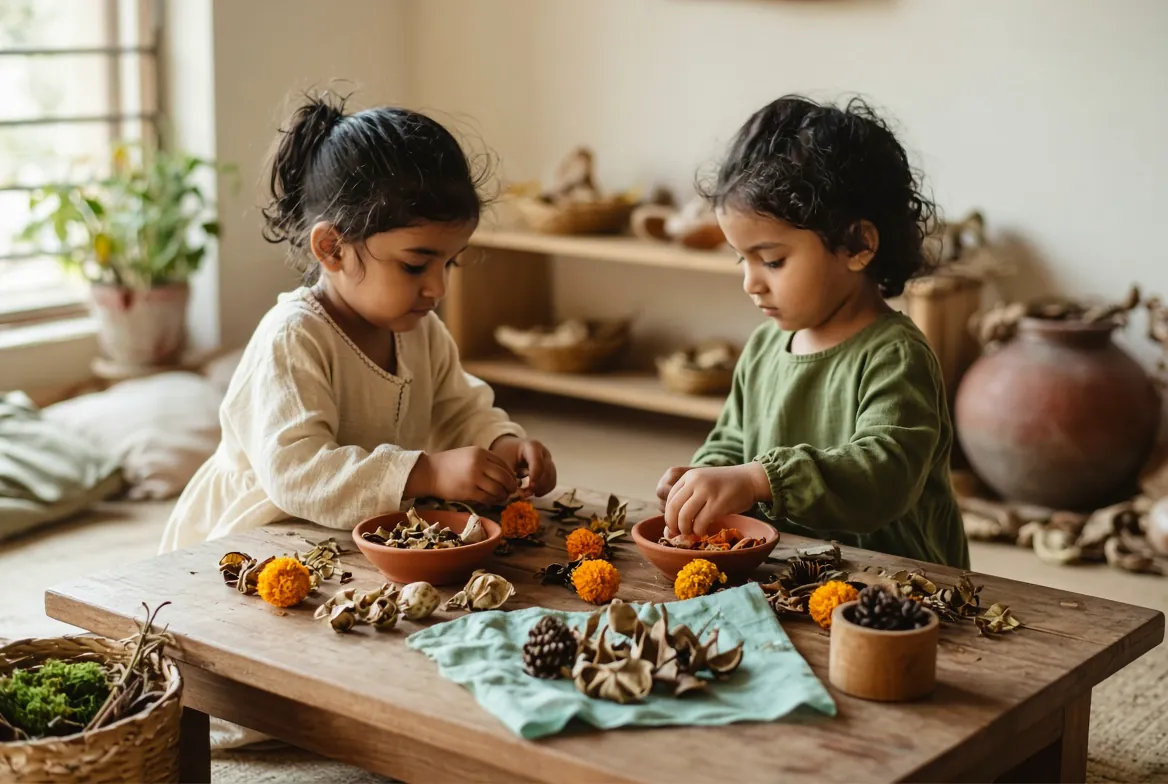
Two young children sorting colourful learning materials together
At NAS, parent guidance stays connected to what children actually experience.
A hand writing carefully on lined paper

What the research says only matters if you can see it in the room.

School Readiness

Plain Answer

What parents need to know.

School readiness includes emotional safety, independence, listening, language, motor control, number sense, early literacy, social comfort and problem-solving.

Readiness is a whole-child picture.

Letters and numbers matter, but they depend on language, attention, body control, confidence, independence and the ability to be in a group.

Each age band has different work.

Toddler years focus on trust and rhythm; Nursery on words and independence; Junior KG on thinking and collaboration; Senior KG on readiness with joy.

Pressure can make readiness weaker.

When children feel rushed, they may perform a skill but lose curiosity, resilience or confidence.

Make It Visible

How this shows up in real life.

Parents usually need fewer abstract terms and more things they can actually notice.

At NAS

Toddler, Nursery, Junior KG and Senior KG each have age-fit experiences, learning outcomes and curriculum focus areas.

At home

Build independence through dressing, eating, tidying, asking for help, listening to stories and solving small daily problems.

Watch for

Longer attention, clearer speech, self-help skills, peer comfort, early mark-making and number talk.

Practise independence kindly.

Let your child try shoes, bag, bottle, snack and cleanup with enough time and no panic.

Read every day.

Story stamina is one of the most useful readiness habits.

Play simple rule games.

Turn-taking games build waiting, memory, number sense and flexible thinking.

Parent FAQ

Answers you can come back to.

Short answers help families compare advice, ask better questions and see what NAS means in practice.

It means confidence, language, independence, movement, listening, friendship, curiosity, early literacy and number sense growing together.

Senior KG should strengthen readiness for the next step while keeping learning active, social, visual and joyful.

Read daily, keep routines steady, encourage self-help, count real things, talk about feelings and let children solve small problems.