Skip to content
New Activity School New Activity School Grant Road - Since 1953
Enquire

Language and Literacy

Reading starts long before reading.

Before children read independently, they need conversation, songs, stories, listening, retelling, sound play, drawing, pretend play and confidence with words.
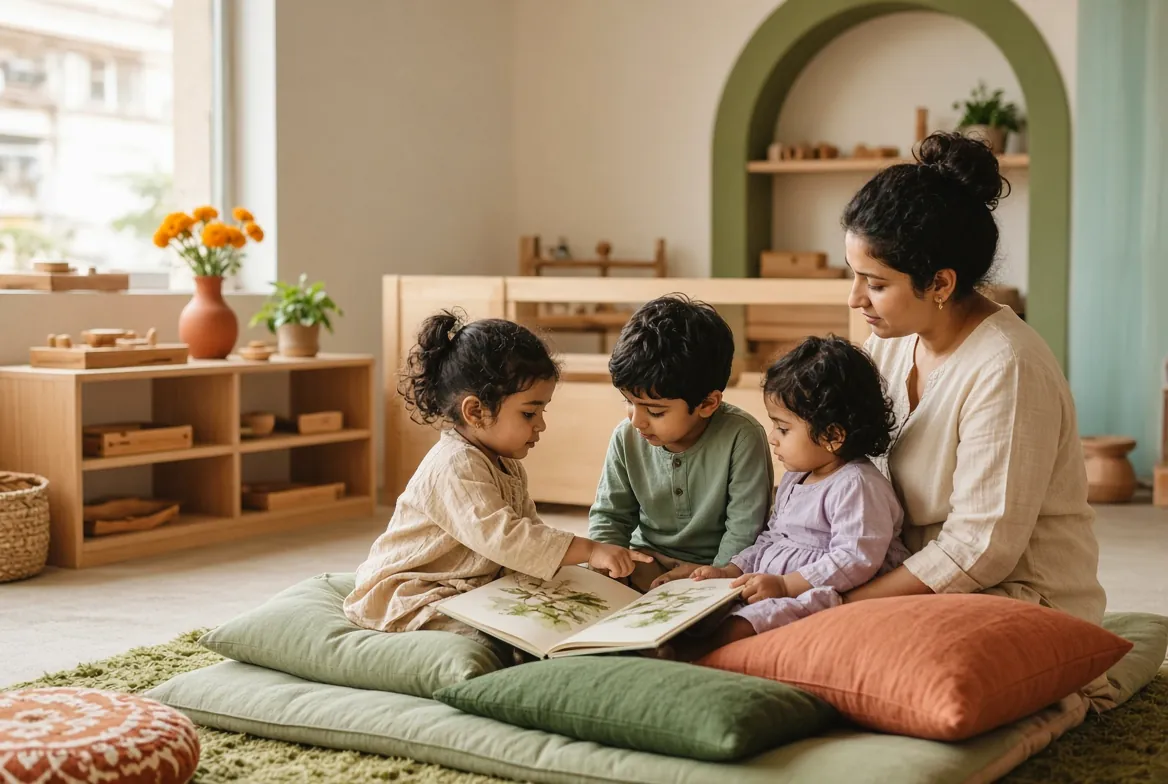
Talk Read Sing Retell Draw
NAS children learning through guided play and activity
At NAS, parent guidance stays connected to what children actually experience.

Plain Answer

What parents need to know.

Early literacy grows through oral language, dialogic reading, vocabulary, story retelling, sound awareness and meaningful mark-making.

Conversation is the foundation.

Children need many warm turns of talk: noticing, naming, answering, wondering and explaining. Passive word exposure is not enough.

Shared reading should be interactive.

A strong read-aloud lets children predict, point, name, ask, retell and connect the story to life.

Writing begins with meaning.

Drawing, marks, labels, name play and storytelling help children understand that print carries ideas.

Make It Visible

How this shows up in real life.

Parents usually need fewer abstract terms and more things they can actually notice.

At NAS

Story circles, picture talk, songs, rhymes, sound play, pretend play and retelling props make language visible every day.

At home

Read the same book more than once. Let your child finish a line, name a picture or tell you what changed.

Watch for

More vocabulary, longer sentences, clearer requests, story memory, pretend dialogue and interest in print.

Pause while reading.

Give the child time to think and answer. The pause is where language grows.

Expand, do not correct harshly.

If the child says "big dog run," you can answer, "Yes, the big dog is running fast."

Use home language proudly.

Strong home-language talk supports thinking and can strengthen later English learning.

Parent FAQ

Answers you can come back to.

Short answers help families compare advice, ask better questions and see what NAS means in practice.

Talk during real routines, read together, name feelings and actions, repeat favourite books and expand your child's sentence warmly.

Letter play can be joyful, but it should sit beside stories, sound games, drawing, conversation and meaningful print, not replace them.

No. Children can grow with more than one language. Home language is an asset when adults use it warmly and consistently.

WA