Skip to content
New Activity School New Activity School Grant Road - Since 1953
Enquire

Child Development

What grows between ages 2 and 6?

The early years are not only preparation for school. They are the years when children build trust, language, movement, attention, confidence and the first habits of thinking.
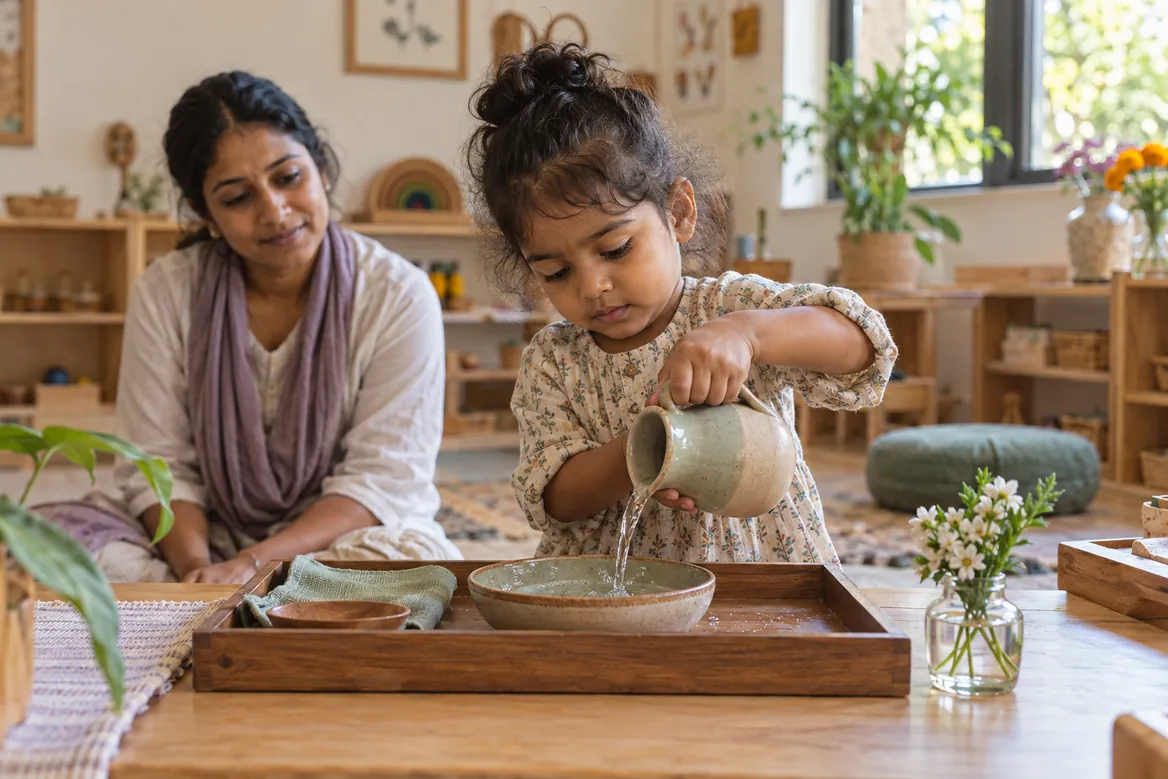
Responsive adults Language-rich days Movement Co-regulation Predictable rhythm
NAS children learning through guided play and activity
At NAS, parent guidance stays connected to what children actually experience.

Plain Answer

What parents need to know.

Children grow best through responsive relationships, rich conversation, movement, play, routines, sleep, sensory exploration and warm adult guidance.

Relationships come first.

Children borrow safety, language and calm from trusted adults before they can manage those things alone. Warm back-and-forth interaction is the active ingredient.

The body is part of learning.

Running, balancing, pouring, threading, clay, music and dance build attention, coordination and confidence before pencil-and-paper work is expected.

Readiness is wider than academics.

A ready child can listen, express needs, join a group, try again, use words, move with control and show curiosity. Letters and numbers sit on top of those foundations.

Make It Visible

How this shows up in real life.

Parents usually need fewer abstract terms and more things they can actually notice.

At NAS

Teachers notice separation comfort, language, play choices, body confidence and social repair in ordinary classroom moments.

At home

Read, talk, sing, count small things, protect sleep and give children real jobs like pouring, sorting, carrying and tidying.

Watch for

More words, more independence, calmer transitions, longer play, better balance, pretend play and small acts of kindness.

Use the child's lead.

Name what your child is doing, then add one word, one question or one small challenge.

Make routines predictable.

A steady morning, meal, sleep and goodbye rhythm helps children feel safe enough to explore.

Praise the process.

Notice trying, waiting, helping, rebuilding and asking, not only the final answer.

Parent FAQ

Answers you can come back to.

Short answers help families compare advice, ask better questions and see what NAS means in practice.

Warm responsive relationships, language-rich interaction, movement, play, sleep, routines and emotional safety matter most. Early academics help only when these foundations are protected.

Look for adults who talk with children, guide play, protect movement, observe carefully, avoid shaming and explain growth in plain language.

Young children need fine-motor play, drawing, clay, pouring, threading, stories and sound play before formal writing pressure.

WA