Skip to content
New Activity School New Activity School Grant Road - Since 1953
Enquire

Social and Emotional Growth

Children learn calm from calm adults.

Self-regulation is built, not born. Young children need adults who co-regulate first, name feelings, model repair and keep the room emotionally safe.
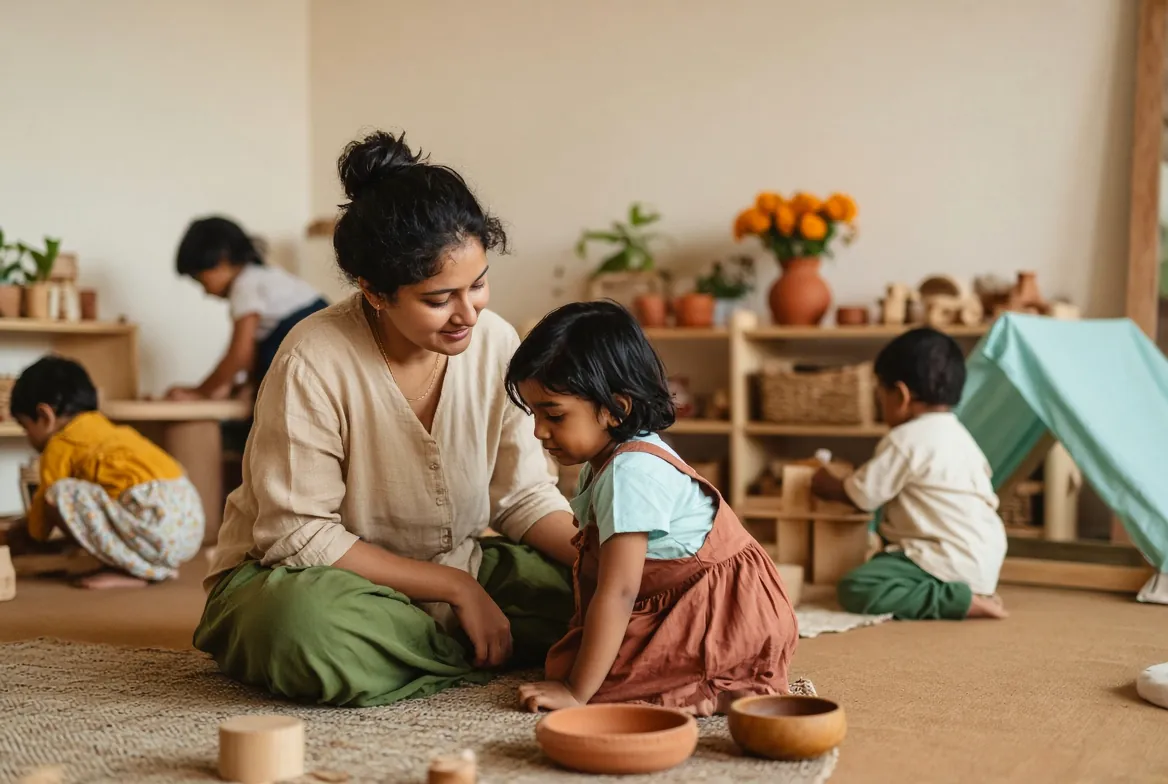
Feelings words Co-regulation Turn-taking Repair Belonging
NAS children learning through guided play and activity
At NAS, parent guidance stays connected to what children actually experience.

Plain Answer

What parents need to know.

Social-emotional growth develops through warm relationships, co-regulation, feeling words, pretend play, turn-taking, repair and predictable routines.

Regulation grows in relationships.

A child first borrows an adult's calm. Over time, with repeated support, the child begins to use words and strategies independently.

Feelings are coached in the moment.

A worksheet about emotions is less powerful than a warm adult naming sadness, waiting, frustration or repair during real life.

Friendship needs practice.

Waiting, sharing, joining play, saying no, apologising and trying again are learned through guided group life.

Make It Visible

How this shows up in real life.

Parents usually need fewer abstract terms and more things they can actually notice.

At NAS

Arrival, snack, group play, conflict, goodbye and classroom jobs are treated as social-emotional learning moments.

At home

Name the feeling, keep the boundary, offer a simple calming action and reconnect after the storm.

Watch for

More words for feelings, shorter recovery time, small acts of repair and willingness to join peers.

Name before solving.

Try "You are upset because the tower fell" before offering advice.

Model repair.

Children learn apology by watching adults repair gently and specifically.

Keep goodbyes steady.

A loving, predictable goodbye is often kinder than a long uncertain one.

Parent FAQ

Answers you can come back to.

Short answers help families compare advice, ask better questions and see what NAS means in practice.

Co-regulation is when a trusted adult helps a child calm through voice, presence, naming, routine and gentle support before expecting the child to self-regulate.

Children need clear boundaries, but shame and fear do not teach regulation. Calm limits, repair and practice work better.

Play lets children practise waiting, negotiating, pretending, helping, repairing and trying again with adult support nearby.

WA